Acoustic treatment in a recording studio: why you can hear the difference in the result
What acoustic treatment of a room is, how it differs from soundproofing and why this invisible work is what makes a podcast or video sound professional.
When someone visits A0Studios for the first time, the first thing they look at is the light and the background. That is logical: it is what shows up in the thumbnail and in the photos shown before booking. The room's acoustic treatment goes unnoticed precisely because it works well: you do not see it, you notice it in the quiet background when you play the recording back at home with headphones, not in the room where it was recorded.
The difference between recording in an acoustically treated room and recording in a living room, an office or any random room is not the microphone you use. It is how the sound bounces before reaching that capsule. A good microphone in a room with echo sounds worse than a more modest one in a well-treated room, and I see that mistake repeated a lot among people who invest in gear before checking where they will record with it.
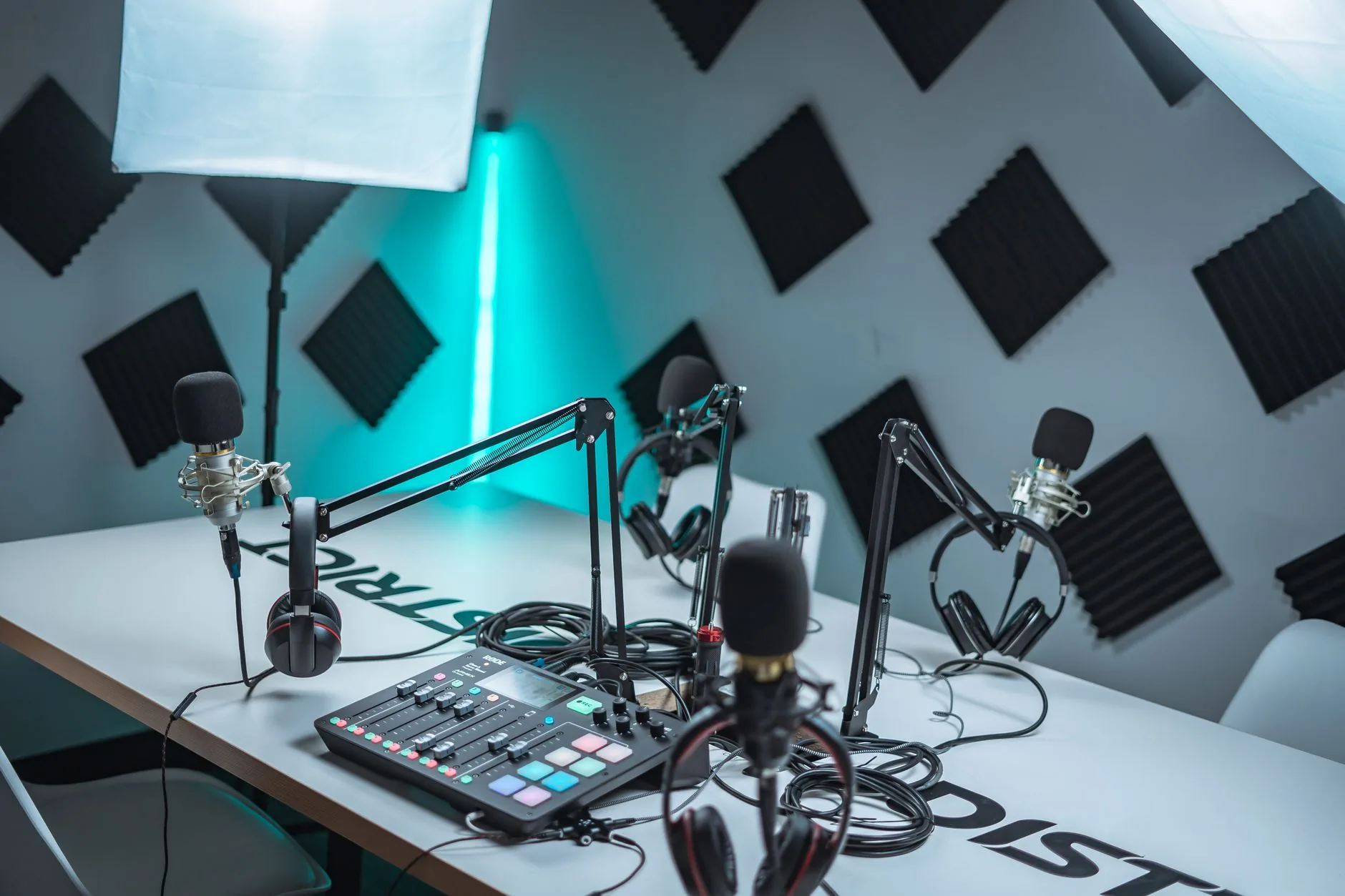
What acoustic treatment is and why it matters
Acoustic treatment and soundproofing are not the same thing, although they get confused all the time. Soundproofing is preventing street noise from getting into the room or noise from inside getting out. Acoustically treating a room is controlling how sound behaves once it is already inside: how much it bounces off the walls, how long it takes to fade, whether frequencies build up in the corners.
It matters because the human ear forgives many things in a recording, but room echo is not one of them. A voice recorded in an empty room, with a hard floor and parallel walls, sounds distant and metallic, even if the microphone is excellent. In a podcast or an interview, that detail makes listeners disconnect before the first minute is over, something that does not happen as fast with an average-quality image.
The typical problem is flutter echo: two hard, parallel surfaces (two smooth walls facing each other, or ceiling and floor) make the sound bounce from one to the other several times before fading. It is most noticeable in claps or strong consonants, and in a voice recording it turns into a metallic timbre that no audio editing fully fixes. You can reduce background noise with software, but the room echo is already recorded inside the voice, mixed with it, and a plugin can no longer separate one from the other.
This weighs more than it seems in formats where audio is heard without accompanying images, such as a podcast that is also uploaded to audio platforms. In video, a somewhat poor image is forgiven because the eye keeps completing the scene. In pure audio, room echo is uncomfortable from second one and there is no way to look elsewhere.
How to do it right
Absorbent panels at the points that matter
You do not need to cover the whole room in foam. What changes the sound most are the first reflection points: the wall right behind the speaker, the sides at microphone height and the corners, where low frequencies build up. Covering those points with absorbent panels reduces the echo without leaving the room completely dead, which is not the goal either.
Isolation from outside noise
Besides the echo inside, there is the noise that comes in from outside: traffic, construction, air conditioning, street noise. At A0Studios we record in a penthouse on Ronda de Atocha, so we close doors and windows properly before starting and avoid using the air conditioning during the take if it makes background noise. It is a simple adjustment, but it gets forgotten more than you would think when someone records outside a studio designed for this.
Outside noise is not always obvious while recording, especially if it is constant: a fridge, the hum of a router or background traffic become invisible to the ear after a while, because the brain stops paying attention to them. The microphone does not apply that filter. It records exactly what is there, so it is worth checking the room's silence before starting, not trusting that "nothing sounds odd".
Microphone placement and distance to the source
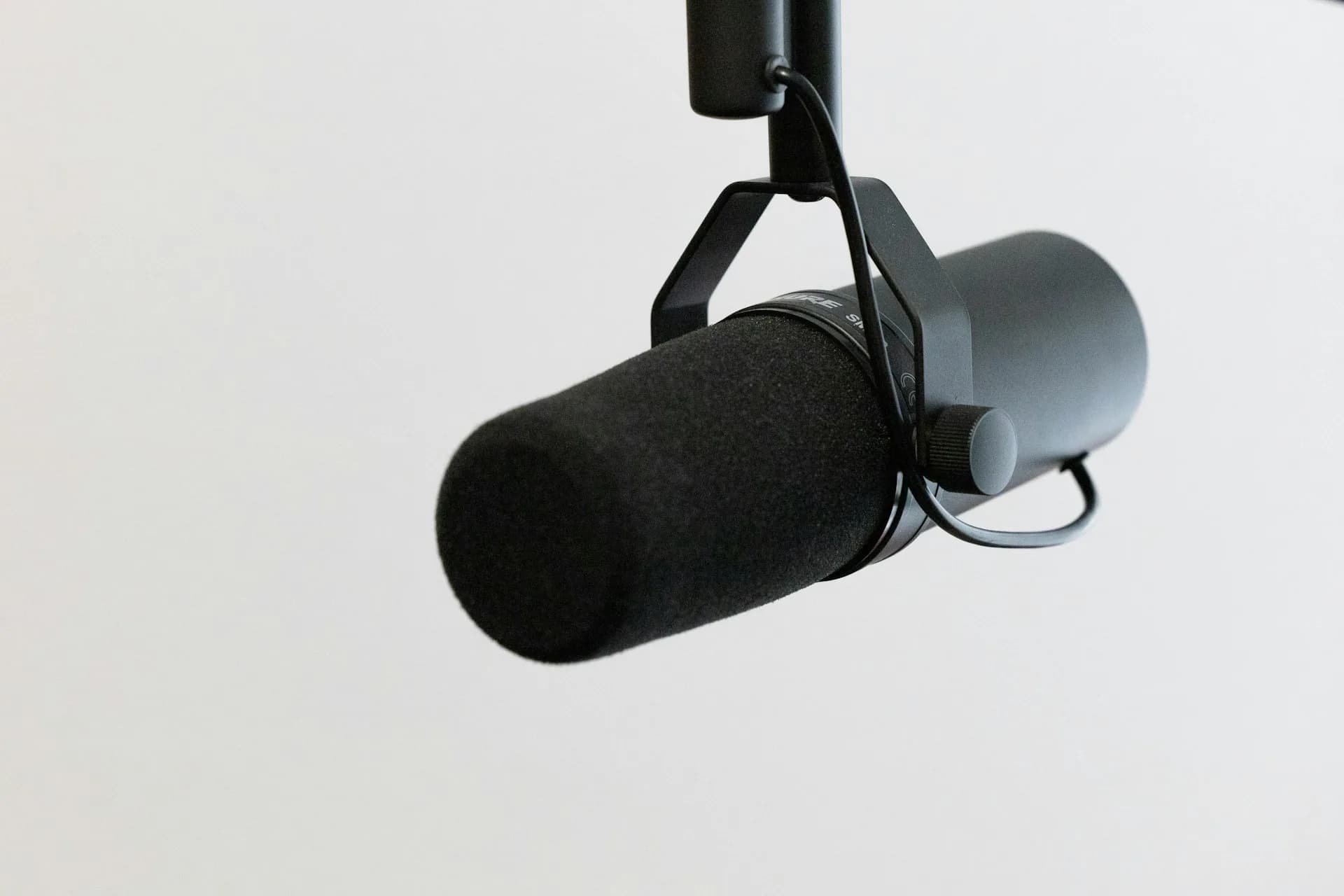
A cardioid microphone placed close to the mouth (10-15 cm) picks up much more direct signal than room, so the residual echo weighs less in the final mix. Placed far away, the microphone picks up more room than voice, however well treated the room is. That is why at A0Studios we adjust the distance before recording, not the person's position relative to the camera.
The polar pattern also matters: a cardioid rejects sound coming from the sides and behind better, while an omnidirectional picks up the whole room equally. For spoken voice in a studio, cardioid almost always wins. And one detail that gets forgotten: if two microphones are open in the same room picking up the same source, phase cancellation appears and the sound loses body, so in two-voice recordings it is best to keep each mic close to its person and switch off the one not in use.
Common mistakes
- Confusing soundproofing (keeping outside noise out) with acoustic treatment (controlling the echo inside).
- Covering the whole room in foam thinking the more absorption the better: a completely dead room also sounds odd.
- Recording near windows, doors or air conditioning vents without first checking the background noise.
- Placing the microphone far from the mouth, so it picks up more room than voice.
- Not doing a sound test before recording: a clap of the hands quickly reveals a room's echo.
- Ignoring constant noise from computer fans, fridges or the hum of the lights themselves.
Frequently asked questions
Do I need a fully soundproofed room to record a podcast?
Not necessarily. What you notice most in a podcast is the room echo, not total isolation from outside noise. Controlling reflections and reducing constant background noise (traffic, air conditioning) is usually enough.
What is the difference between soundproofing and acoustically treating a room?
Soundproofing stops noise from entering or leaving the room (isolation). Acoustic treatment controls how sound bounces inside the room (panels, absorption). They are different jobs and often only the second one is needed.
Can you hear the difference if I record at home with homemade solutions?
Yes, though with limits. A room with a rug, thick curtains and some upholstered furniture already sounds better than an empty one with a hard floor. But real acoustic panels and the right microphone distance still give a jump that DIY does not fully match.
Does acoustic treatment also affect the image of the video?
Not directly, but a room designed to record sound well usually also has better light control and fewer visually distracting elements. You end up looking after both at the same time.
If you record a podcast, interviews or video with live audio, the sound of the room weighs as much as the image, even if it is less noticeable at first glance. At A0Studios the room is already treated for this, so you do not have to think about it. Write to us from /#contacto and let's talk.
If you want to record premium content in Madrid, let's talk
From a quick Reels session to a full production day with editing and delivery, we can scope it to fit.