Talking head in brand video: what it is and when it works
The talking head is the most direct format there is: one person speaking to camera with hardly any visual support. When it works, when it doesn't, and how to record it so it holds attention.
Some video formats rely on fast cuts, b-roll and music to hold attention. The talking head is the opposite: one person speaks directly to camera for most of the piece, with very little visual support, and the video works or fails depending on whether that person can hold attention alone.
It's also the hardest format to disguise. A Reel with fifteen cuts can cover a weak script with editing rhythm. A talking head has nowhere to hide: if it doesn't work, you can tell in the first five seconds.
What a talking head is and why it's used
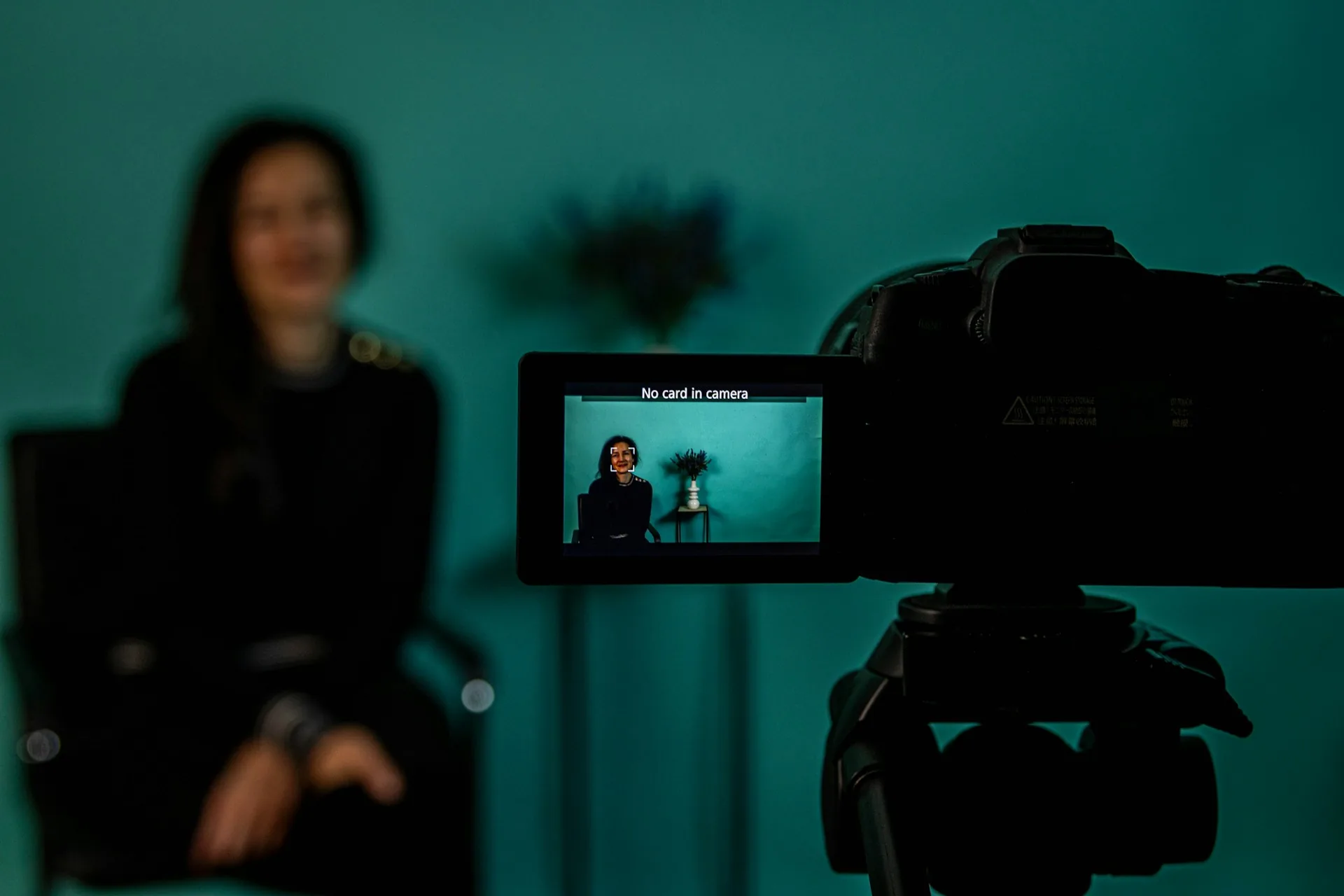
A talking head is any video where the subject speaks looking at the lens, with a fixed camera or very little movement, and the weight of the piece falls on the speech and the person, not the editing. It stands apart from formats like the heavily cut Reel or the explainer built on b-roll and graphics.
It differs from a voiceover in that there is a face in front of the viewer the whole time. That builds trust and closeness when the person connects well with the camera, but it also exposes any doubt, tic or stumble that a cut would hide in another format.
It works especially well for founder content, LinkedIn videos, direct messages to clients and pieces where what sells is not the product but the person explaining it. It's the format that builds authority fastest, and also the one that destroys it fastest if it comes across as forced.
On social media it usually generates more real engagement than a heavily edited Reel, precisely because it feels less like advertising and more like a direct conversation between two people. That makes it very useful for positioning someone as a reference in their field, not just for promoting a one-off service.
How to do it well
Framing and eye line
The usual framing is a medium close-up, eyes on the upper third of the frame and the lens at eye level, not below. Looking directly at the lens, and not at a nearby point on the monitor, is what makes viewers feel they're being spoken to and not to a screen.
The background matters too, even if it's talked about less. A background with some depth and blur works better than a bare flat wall, because it keeps the figure from looking flat and gives the shot a sense of real space instead of a photo studio.
Speech rhythm and pauses
The most common mistake is speaking as if reading a text: constant rhythm, no pauses, no variation in energy. We record with short sentences and real pauses between ideas, because a well-placed pause is easy to edit and a flat delivery can't be fixed in post.
Length by platform
A talking head for LinkedIn holds up for 60 to 90 seconds if it gets to the point from the first shot. For YouTube, with context and development, it can last several minutes as long as the pace changes every 20-30 seconds. Recording without thinking about this leads to pieces that run long for no reason.
When it makes sense (and when it doesn't)
- It works when the message depends on who says it: a founder, an expert, a brand spokesperson with real authority.
- It works for short, direct videos where the hook has to land in the first three seconds.
- It doesn't work if the person isn't trained to speak to camera and the result feels stiff or read.
- It doesn't work for explaining long processes or complex data, where the visual support of b-roll or graphics helps more.
- It performs better combined with a supporting cut every 20-30 seconds than held pure for more than two minutes.
Frequently asked questions
Do I need a teleprompter to record a talking head?
It's not mandatory, but it helps a lot if the script is long or if you get nervous improvising. For short pieces with a well-internalized message, speaking without a teleprompter usually feels more natural.
How many takes do I need to record on average?
For a short 60-90 second piece, 3 to 5 full takes is usually enough if the script is well rehearsed before recording. Less rehearsal means more takes and a longer session.
Is it better to record standing or sitting?
It depends on the tone. Standing conveys more energy and works well for short, direct messages. Sitting conveys calm and works better for longer explanations or a friendly conversational tone.
Can I combine a talking head with a voiceover in the same video?
Yes, it's common. The talking head opens or closes the piece on camera and the voiceover narrates the process or data parts, supported by b-roll. It keeps the human connection without the whole piece depending on holding eye contact with the camera the entire time.
If your next piece depends on someone holding the camera with real presence, at A0Studios we record with framing and pacing direction included, not just the camera switched on. Get in touch via /#contacto.
If you want to record premium content in Madrid, let's talk
From a quick Reels session to a full production day with editing and delivery, we can scope it to fit.