What to wear to record a video: colors, patterns and mistakes that show on camera
Which colors work well on camera, which patterns to avoid and why clothing affects a recording as much as light or background.
Every week I see someone arrive who has polished the script, booked the studio and tested the light, and then shows up in a fine-striped shirt or a white T-shirt that loses all its contrast on camera. Clothing is not a minor detail: it is the first thing you see in a video, even before you hear the first sentence.
You do not need a stylist or new clothes to record well. You need to understand a handful of simple rules about how a garment behaves in front of a camera, which do not always match what looks good in the mirror or in a photo.
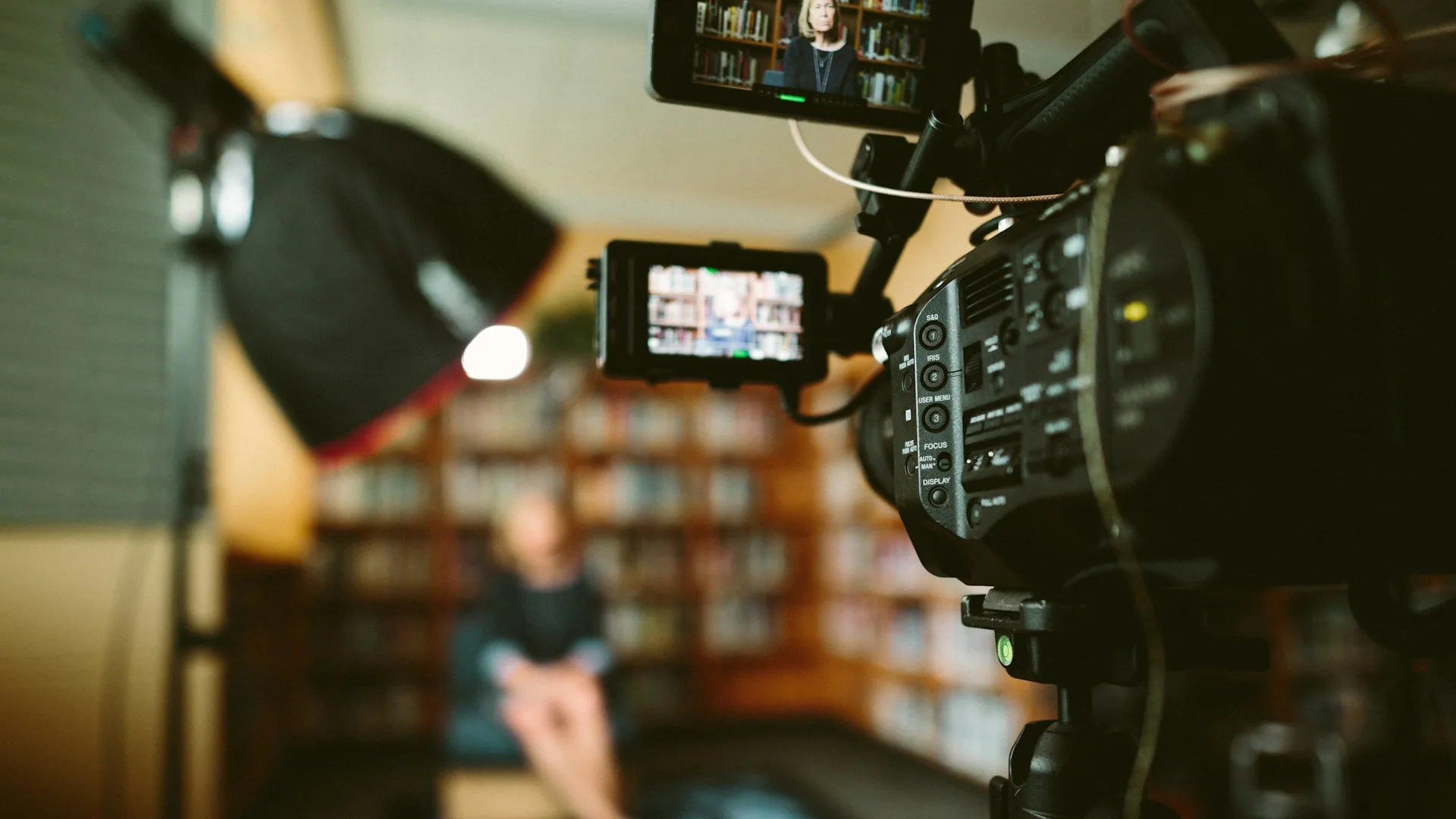
Why clothing matters as much as light or background
A camera does not see exactly what the eye sees. It compresses color ranges, saturates certain tones and reacts differently depending on the sensor and the final compression the platform applies where the video is uploaded. A garment that looks elegant in person can look flat, blown out or with a pattern that vibrates on screen without the person noticing until they review the recording.
Clothing also affects the lighting and editing work. A badly chosen color forces corrections in post-production, and some mistakes, such as the moiré of a fine-checked shirt, are not fully fixed however much time you spend on DaVinci Resolve.
There is one more practical reason: if you shoot on a green screen or in front of a very specific background color, the clothing can blend into that background and create a strange cutout around the body. In a studio with a natural background, such as a living room or terrace, the risk is lower, but it still exists if the garment is too close to the dominant tone of the scene.
How to do it right
Colors that work well on camera
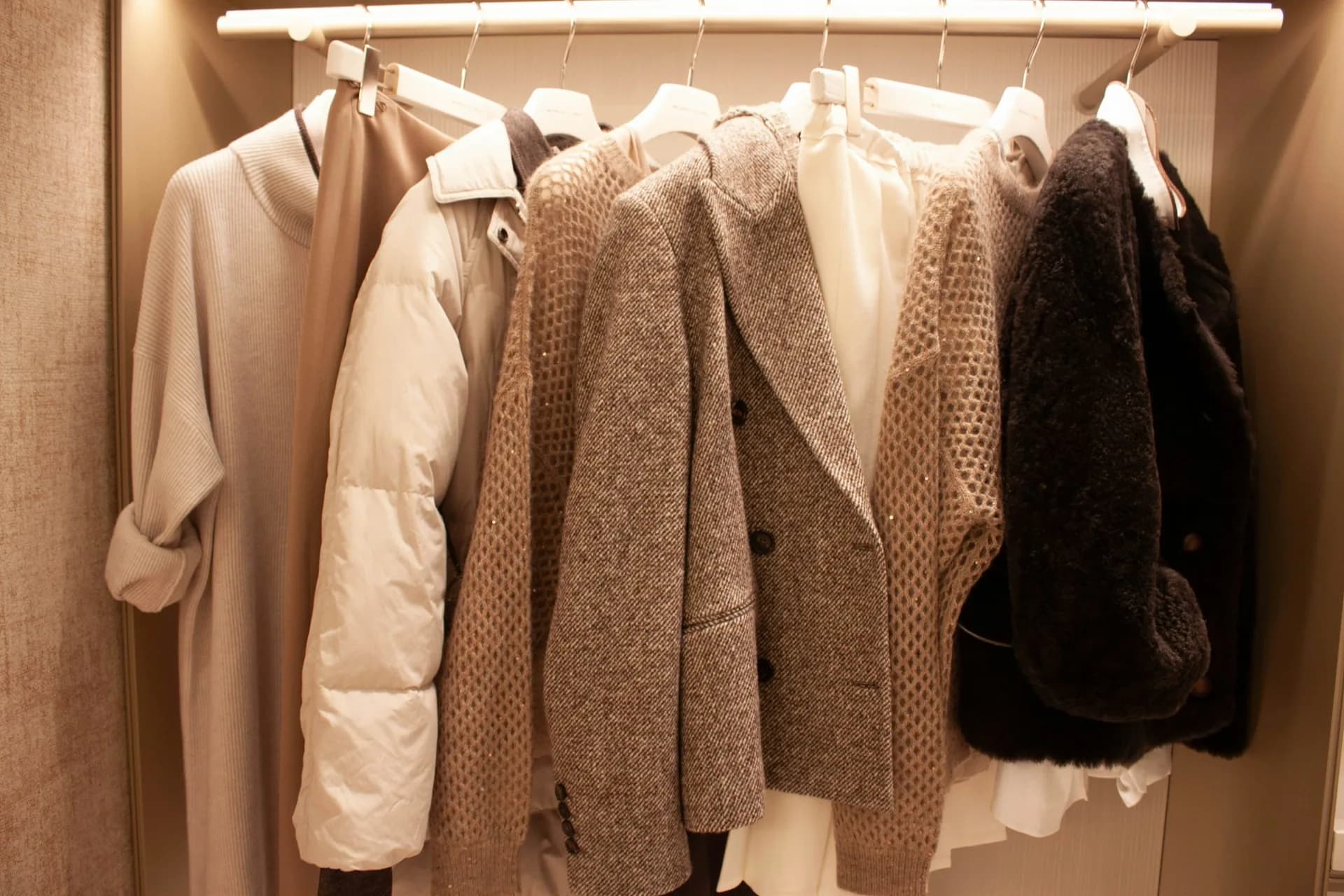
Solid colors with medium saturation are usually the safest bet: navy blue, olive green, burgundy, stone gray. They give contrast with skin and with most backgrounds without stealing attention from the face. Pure white tends to blow out under strong lights and loses texture detail. Pure black against a dark background flattens the silhouette and complicates the lighting work. Saturated red can bleed on the sensor and create a strange halo around the edges of the garment.
Patterns and textures to avoid
Fine stripes and small checks create moiré: a wavy pattern that appears when the weave of the fabric interferes with the sensor's resolution. It is not a microphone problem or a camera fault, it is pixel math, and it is more noticeable in video compressed for social media than in a photo. Shiny fabrics or sequins reflect light unevenly and create distracting spots. Large prints compete with the face for the viewer's attention, which is exactly the opposite of what you want.
Accessories, shine and logos
Logos and large text on clothing date the video and pull attention away from the message. Long earrings or necklaces that move catch light and, if you use a lavalier mic, can rub against it and add noise with every movement. Glasses without an anti-reflective coating create a glare that covers the eyes at certain light angles, something easy to avoid simply by telling us before the session.
Common mistakes
- Choosing clothes the very morning of the shoot without testing them under the real light.
- Wearing a garment the same color as the set background.
- Wearing shirts with fine stripes or small checks that create moiré on video.
- Combining several shiny or heavily patterned garments at once.
- Forgetting about sound: jewelry that rubs against the lavalier mic with every gesture.
- Not bringing a spare change of clothes for long sessions where sweat or stains may show on camera.
Frequently asked questions
Can I wear pure white or black?
You can, but it requires more care with the light. Pure white tends to blow out and lose texture, and pure black on a dark background flattens the silhouette. A light gray, or black combined with a better-lit background, usually works better.
What happens if my clothes have fine stripes?
Moiré can appear, a wavy pattern that interferes with the camera sensor. If there is no alternative, it helps to stand a bit further from the camera or switch to a shot where the garment takes up less of the frame.
Does clothing color matter if I shoot on a green screen?
Yes, quite a lot. Any garment the same tone as the chroma key can become partly transparent when keying. Avoid saturated greens or blues if the background will be replaced in editing.
Which colors work best in the A0Studios studio?
With natural light and a living-room or terrace background, what works worst is very bright white and heavily busy prints. Solid colors with medium saturation blend in best without losing presence.
Clothing will not fix a weak recording, but a bad choice can ruin a good one. If you are unsure what to wear before your session, ask me directly from /#contacto and I will tell you what works best for your case.
If you want to record premium content in Madrid, let's talk
From a quick Reels session to a full production day with editing and delivery, we can scope it to fit.