What to record in an intensive content day
How to structure what to record in an intensive content day: which formats to prioritise, in what order and how to leave the studio with weeks of material ready.
An intensive content day is not recording a lot of anything. It is recording what you need, in the right order, so that at the end of the day you have weeks of posts ready. The difference between leaving with 40 useful clips or with 4 you actually use almost always lies in the prior planning, not in the time you spend in front of the camera.
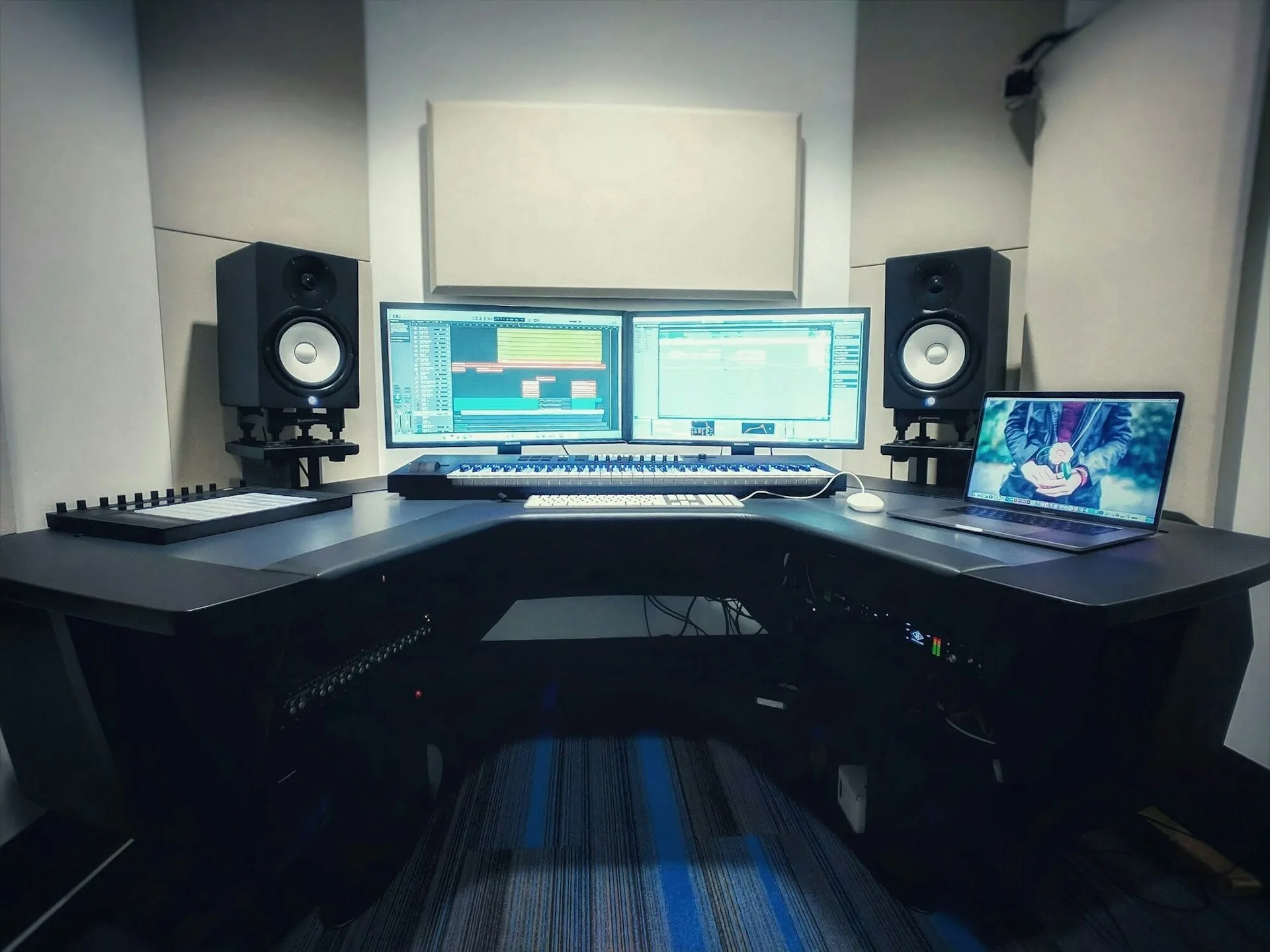
At A0Studios we have been running days like this with founders, marketing teams and personal brands. What we have learned is simple: order matters as much as volume. If you arrive without an outline of what you will record and in what sequence, you lose the best hours of the day on decisions that should have been made before walking into the room.
Why an intensive day changes the scale
Recording in separate one-hour sessions makes sense when you are starting out. But beyond a certain publishing rhythm, that approach is inefficient. Every time you set up the camera, calibrate the sound, prepare the set and get into recording mode, you are spending energy that doesn't produce content.
A 6-8 hour day in the studio eliminates that fixed cost. You pay it once and record 3-4 weeks of material. The effort/output ratio changes completely. At A0Studios, most clients who come once a month get between 15 and 30 finished pieces per session: long videos for YouTube, short clips for LinkedIn or Instagram, podcast pillars and, in some cases, testimonials or product pieces.
The problem is that many people arrive at the studio with good energy but no concrete plan for what to record. The result is disorganised material, mixed formats and takes that are useless because the context was badly set up.
How to structure what you record
Start with the long-form content
The first things to record are the videos that need the most concentration: podcast episodes, tutorials, authority videos for YouTube. Your mind is fresh, your voice isn't tired and mistakes are less frequent. If you have 3 podcast episodes planned, record all 3 before moving to any other format. Switching between very different formats in short intervals fragments your mental state and lowers the quality of the result.
Then, the short clips
Once the long-form content is recorded, short clips are much easier. Many come straight from cutting the footage you already have, but others need to be set up separately: direct-to-camera hooks, answers to frequently asked questions, 60-second tips. For LinkedIn or Instagram Reels, 2-3 minutes of recording per clip is usually enough. With 10-12 clips you have a month of posts.
Close with testimonials or interviews
Testimonials, interviews or pieces where you only talk about a specific product or service work well at the end. They don't need the same level of narrative energy as a tutorial, and if the guest arrives mid-morning, the timing fits perfectly. At A0Studios we use multicamera for this type of recording: a Sony A7 as the main camera and a second camera on a tighter shot for editing cutaways.
Common mistakes when planning the day
- Arriving without scripts: improvisation doesn't scale. Even if the format is conversational, you need at least an outline of points per piece.
- Recording short clips first: if you start with the Reels, by the time you reach the podcast you will have already spent vocal and mental energy on shorter, faster tones.
- Not allowing for set change time: between formats there are 10-15 minutes of adjustment. In a 6-hour day, that is a full hour if you change setup 4 times.
- Cramming too many different topics into the same day: a day with 8 topics produces scattered content. Better 3 well-developed topics with format variations.
- Not marking the best takes at the end: if you hand over the footage without references, the editor takes twice as long and the final output suffers.
Frequently asked questions
How many videos can you record in a 6-hour day?
It depends on the format and complexity. A well-planned day at A0Studios usually produces between 2 and 4 long videos of 10-20 minutes plus 8-15 short clips. If the focus is only short clips of 60-90 seconds, the number can exceed 20.
Is it better to record everything in one day or spread it over several sessions?
It depends on your publishing rhythm. If you publish daily or very frequently, a monthly day is more efficient. If you publish 2-3 times a week, it may make more sense to come every 2 weeks with less material per session.
Do I need to bring a written script, or are notes enough?
For videos longer than 5 minutes, a script or at least detailed bullets is always better. At A0Studios we use a teleprompter for people who prefer to read without it showing, but even with notes in hand the result improves compared with improvising from scratch.
What equipment does A0Studios use in an intensive multicamera day?
The standard configuration includes a Sony A7 on the main shot, a second camera for the close-up, lavalier or studio microphones depending on the format, an LED light kit with diffusers and the Madrid penthouse background. Audio goes to a Focusrite interface and is recorded on separate tracks for greater flexibility in editing.
If you are thinking about organising your first intensive content day, or want to improve how you structure the ones you already do, at A0Studios we plan the session with you before the recording day. Studio time is more productive when what you will record has already been decided. Get in touch via /#contacto.
If you want to record premium content in Madrid, let's talk
From a quick Reels session to a full production day with editing and delivery, we can scope it to fit.