How to lose your fear of the camera: tips for your first recording
Why your voice tightens up in front of a camera, what you can prepare before recording, and how founders and teams lose the fear when they record for the first time at A0Studios.
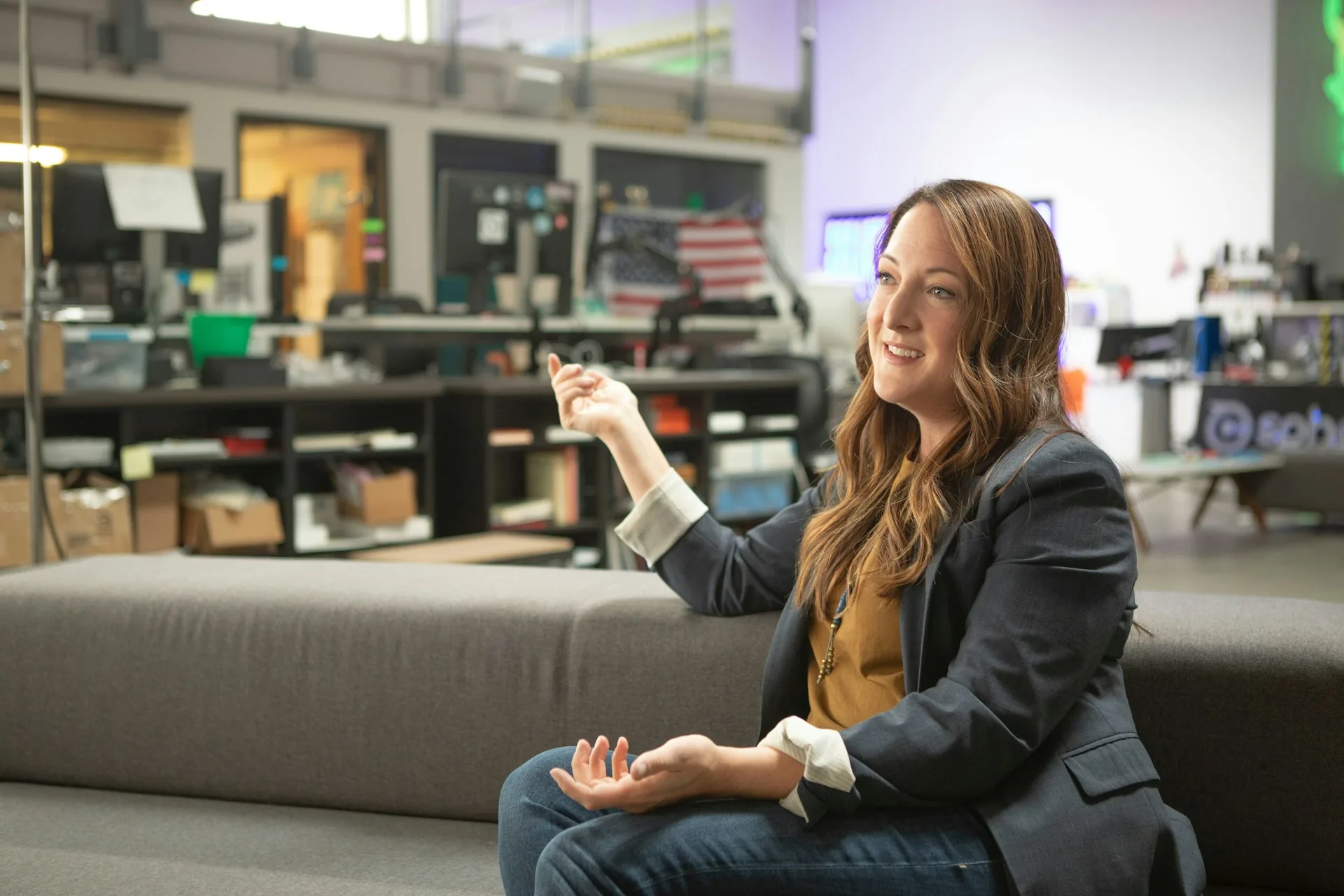
Almost every founder and team that comes to record for the first time at A0Studios says the same thing before starting: "let's see how I come across, I'm not good at this". It is the most normal reaction there is. Talking to a camera is not the same as talking to a person, even if the brain takes a while to figure that out.
Fear of the camera doesn't go away by reading tips the night before. It shrinks with concrete preparation and a well-handled first few minutes of the session. This is what we do at A0Studios with first-time talent, and what you can prepare yourself before sitting in front of the lens.
Why your voice tightens up in front of a camera
When you talk to a person, you get signals all the time: they nod, smile, frown if they don't understand something. In front of a camera those signals disappear. The brain reads that silence as a social threat and triggers the same response as in any exposure situation: your pulse speeds up, your mouth dries out, your voice goes higher.
On top of that comes self-consciousness: while you speak, part of your attention is judging how you look instead of focusing on what you are saying. That is why someone who explains things brilliantly in a meeting goes blank as soon as they see the red recording light.
How to overcome fear of the camera step by step
Prepare the content, not a word-for-word script
Memorizing a script closes the door on speaking naturally: the moment you forget a word, the break shows. It works better to prepare 3-4 key ideas per block and let the sentence come out different each time. At A0Studios we use a technical script on the teleprompter only for structure, not for literal memorization.
Record before you record
The first take is almost never the good one, and that is fine. Before the take we keep, we record one or two warm-up takes with no pressure, just so your body gets used to the camera being on. That first minute of nerves has to be spent before the take that matters, not during it.
Talk to a person, not a lens
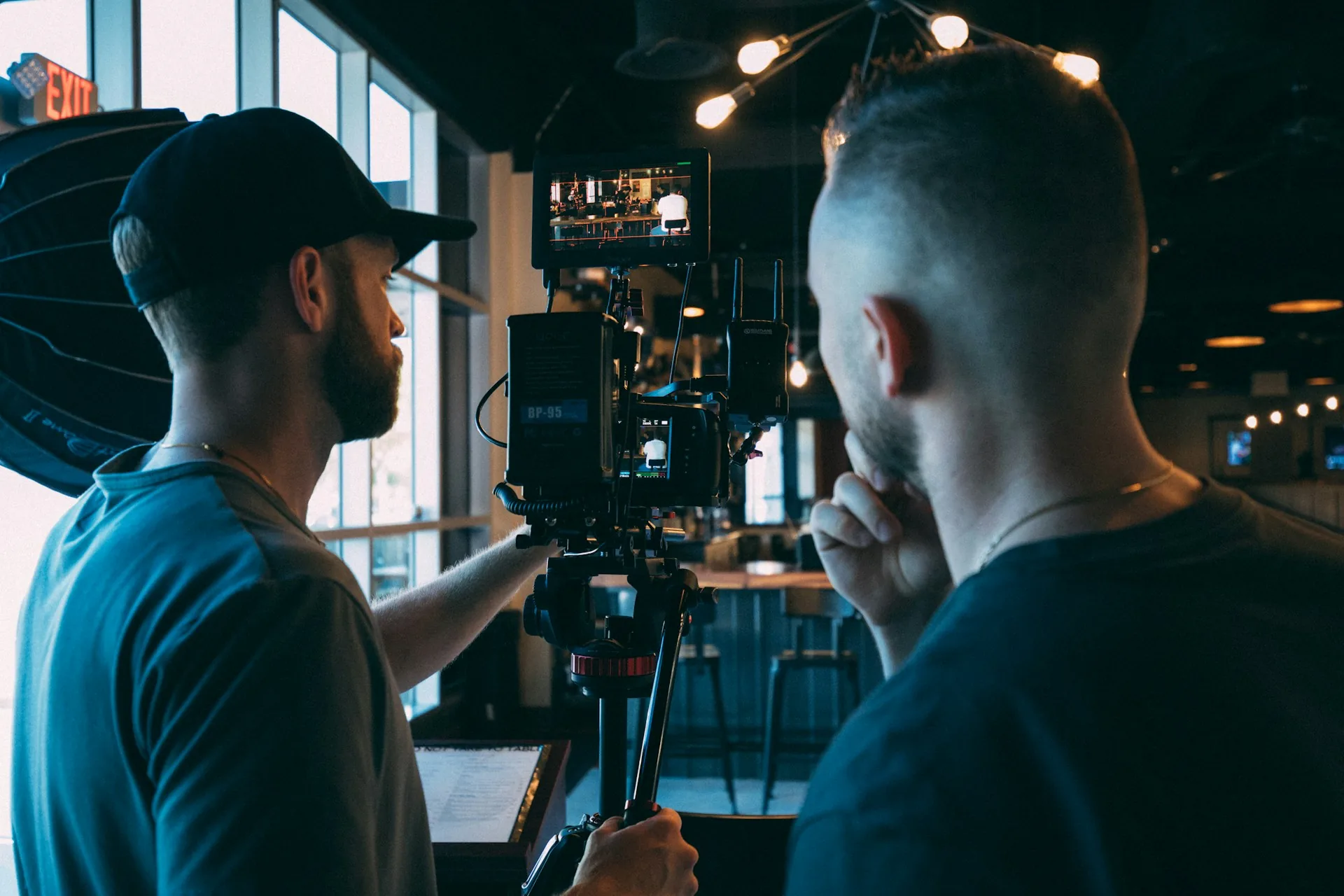
In session, we put someone from the team right next to the lens so you look at a real person while you speak, not at a glass circle. It completely changes the tone: the voice drops, the rhythm becomes conversational and that artificial "I'm reading something" accent disappears.
Common mistakes that make camera fear worse
- Trying to record the perfect take on the first go instead of accepting that the first two are warm-ups.
- Memorizing the script word for word instead of having the ideas clear and letting the sentence come out naturally.
- Recording tired or hungry right before an important meeting, with no room to breathe before starting.
- Looking at the playback monitor instead of the lens or the person acting as your reference.
- Not stopping when something goes wrong: forcing the take tightens your voice and it shows in the final result.
- Going to record alone, with nobody to give directions or feedback between takes.
Frequently asked questions
Is it normal to fear the camera even if you are a good communicator in person?
Yes, it is one of the most common things we see in session. Public speaking and talking to a camera trigger different mechanisms because the real-time feedback from the other person disappears.
How long does it take to lose the fear of the camera?
Most people notice a clear change between the first and third take of the same session. After several recorded sessions, being at ease becomes almost automatic.
Does practicing in front of your phone before the session help?
It helps you get past the initial shock of seeing yourself speak, but it doesn't replace the real session: at A0Studios we take care of the light, the framing and the direction so that first wave of nerves doesn't depend only on you.
What happens if I go blank during the recording?
You stop, breathe and repeat the block. It is a normal part of any session and costs no real time: cutting and restarting takes seconds, while forcing a tense take costs much more in editing.
If your first recording makes you nervous, that is a sign you take your content seriously, not a sign you aren't cut out for this. Tell us what you want to record from /#contacto and we will prepare the session so the fear stays out of frame.
If you want to record premium content in Madrid, let's talk
From a quick Reels session to a full production day with editing and delivery, we can scope it to fit.