Microphones for podcasts and interviews: types and when to use each
A practical guide to microphone types for podcasts and interviews: condenser, dynamic and lavalier. When to use each one and which mistakes to avoid.
When someone listens to your podcast or interview, the microphone you use decides whether they keep listening or close the tab. That is no exaggeration. The video can be improved, but bad audio is plain fatigue. Choosing a microphone depends on three factors: the format you record, the environment you do it in and how much control you want over the sound.
At A0Studios we use different types of microphones depending on what each client records. There is no one microphone that is best for everything. There is one that fits what you do. This is what you need to know to choose well.
Why the microphone type changes the final result
The difference between a condenser and a dynamic microphone is not only technical. It directly affects the tone of the voice, how the room ambience is picked up and how much space you need to control for the audio to sound good. Choosing the wrong type can't always be fixed in post-production.
Before getting into types, a basic concept: the polar pattern. It is the way the microphone picks up sound. Most podcast and interview microphones use a cardioid pattern, which mainly picks up what is in front and rejects side and rear sounds. Some have a bidirectional pattern, for two people face to face, or an omnidirectional one, for meetings or very controlled environments. The pattern matters as much as the type.
With that clear, the three types you will meet most often in podcast and interview setups are condenser, dynamic and lavalier.
How to do it well: the three main types
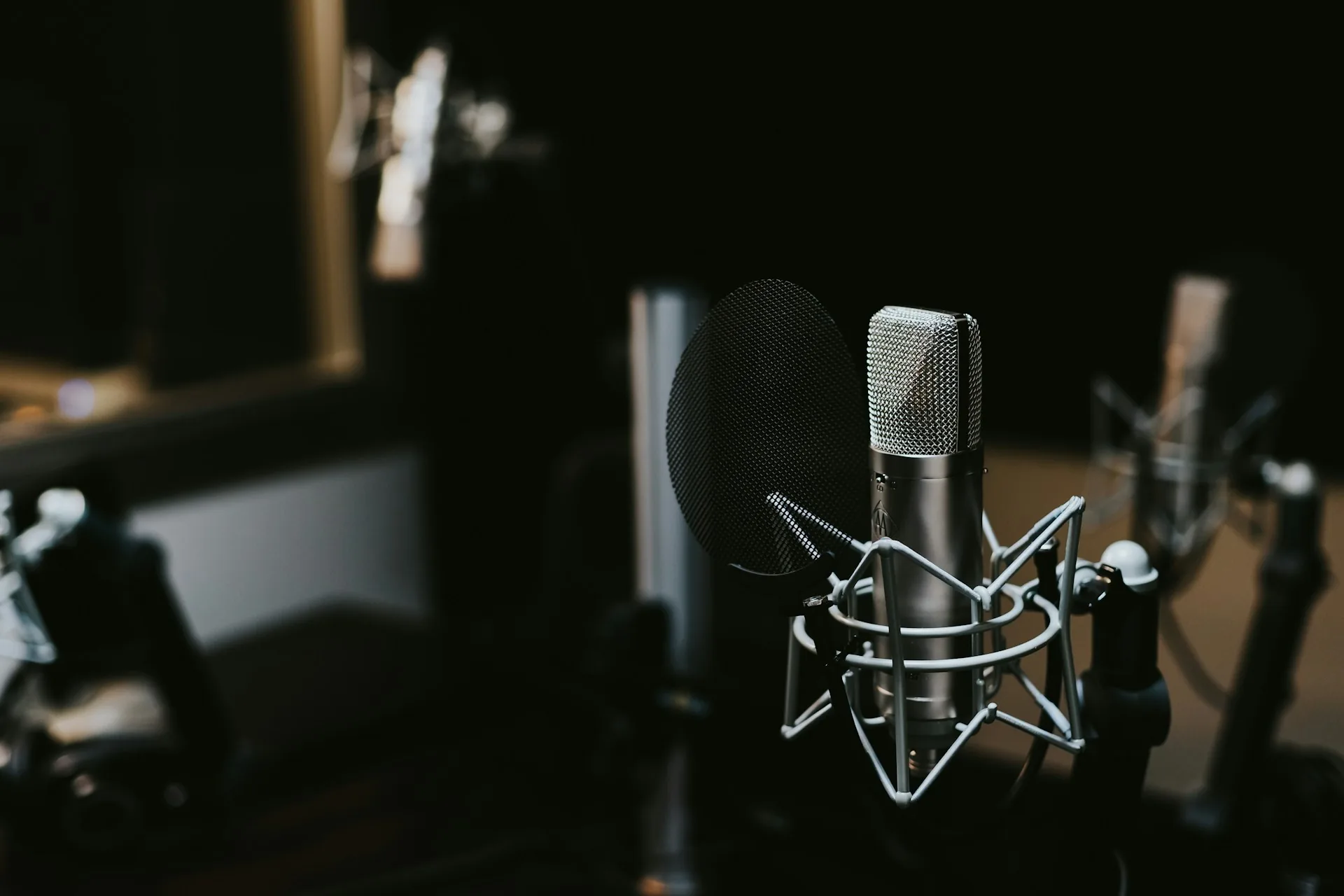
Condenser microphones
The condenser is the studio standard for indoor podcasts and interviews. It captures high frequencies in great detail, which makes the voice sound natural, open and clear. The catch: it also captures the room. In an acoustically treated studio, that is an advantage. In an untreated office, the air conditioning, traffic and echo off the walls will show up in the recording. The Rode NT1, the Audio-Technica AT2020 or the Neumann U87 are common references in professional setups. If you record in a controlled environment, the condenser is the best option.
Dynamic microphones
The dynamic microphone was designed for live use, but in recent years it has become a very solid option for podcasts and interviews in environments with some background noise. It rejects side and background sound more than a condenser, which makes it more forgiving of the room. The voice sounds warmer and less bright, which many people find more natural in a conversational format. The Shure SM7B and the Electro-Voice RE20 are the two most used in professional podcasting. They need more gain than a condenser, so you need an interface with a powerful preamp or an extra amplifier such as the Cloudlifter. If you record in a room without much acoustic control, the dynamic will give you fewer problems.
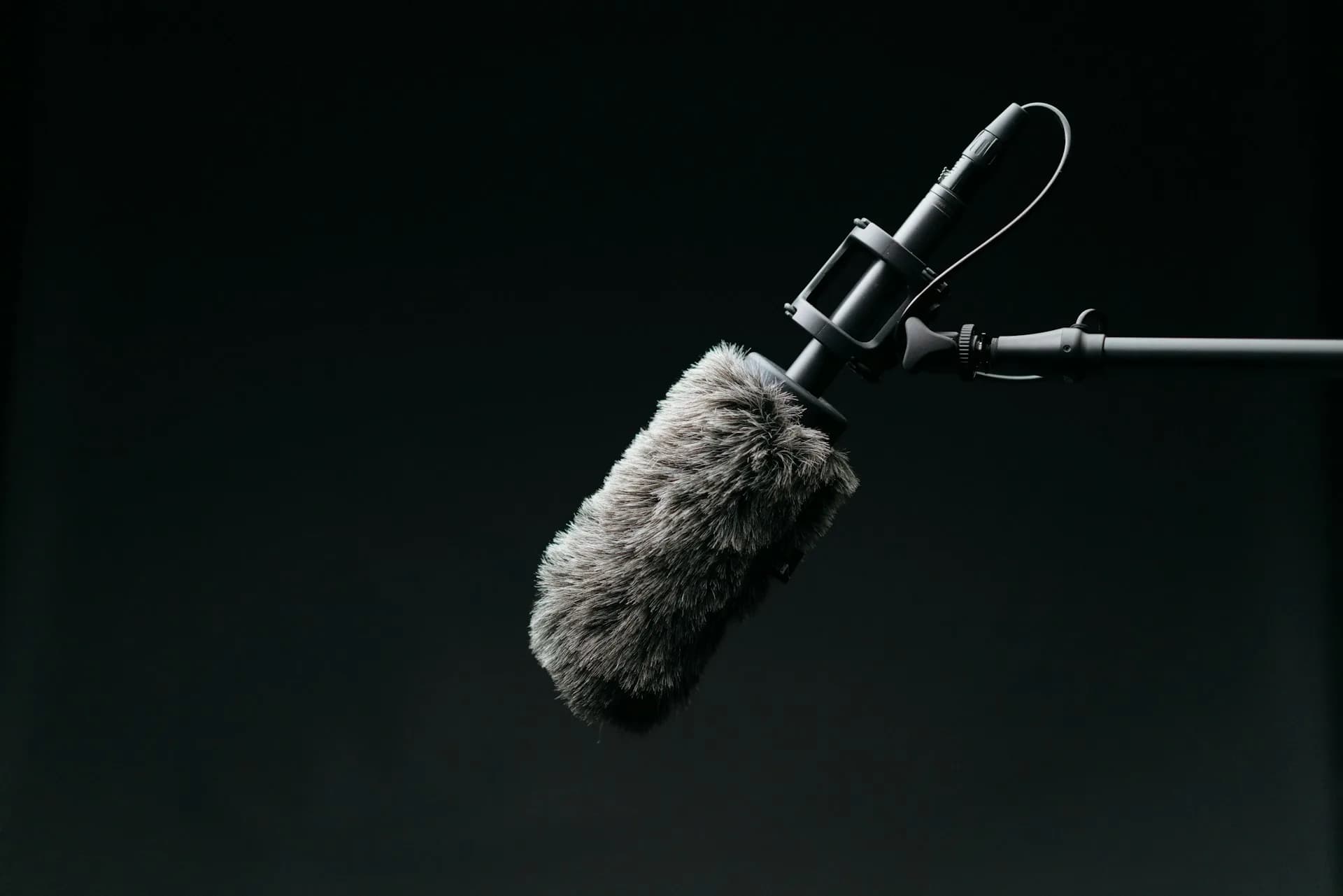
Lapel or lavalier microphones
The lavalier is the microphone clipped to clothing, near the chest. It is mainly used for interviews on the move, presentations or when the subject can't be in front of a stand microphone. The advantage is that it is completely discreet and keeps a constant distance from the mouth. The downside: it picks up clothing movement and is more sensitive to wind outdoors. Wireless models such as the Røde Wireless GO or the DJI Mic are the most used today for company content and on-the-road interviews. At A0Studios we use them when we record interviews that combine front-facing shots with moving shots.
Common mistakes when choosing a microphone
- Using a condenser in an untreated room: the result will have reverb and background noise that can't be fully removed in editing.
- Buying the most expensive microphone without checking the environment: equipment doesn't make up for the room. Control the space first, then the microphone.
- Mixing two microphones of different types without matching levels: they sound different and editing becomes costly.
- Putting the lavalier under noisy fabric: every movement shows up in the audio as a dull thump.
- Not doing an audio test before recording: two minutes of checking with headphones saves you from finding the fault while editing.
- Placing the condenser too far from the mouth: the voice loses presence and the signal-to-noise ratio gets worse.
Frequently asked questions
Which microphone is best for a two-person podcast?
It depends on the space. If you record in an acoustically treated studio, two condenser microphones in cardioid pattern give the cleanest result. If there is background noise, one dynamic per person is safer. You can also use a single bidirectional microphone between the two of you, although the balance of voices is harder to control.
Do I need an audio interface with a dynamic microphone?
Yes, always. Dynamic coil microphones have an XLR output and need to connect to an interface with a powerful preamp. Some, like the SM7B, also need an extra amplifier such as the Cloudlifter or the Fethead to reach the right gain level without introducing noise.
Are USB microphones good enough for a professional podcast?
For basic content, yes. For mid-to-high quality production, no. USB microphones have the interface built in, which simplifies the setup but limits control over gain, EQ and signal processing. If you are going to record regularly and want to grow your setup, XLR from the start is the right call.
What is the right distance between the mouth and the microphone?
Between 15 and 25 centimetres for most condenser microphones in cardioid pattern. For dynamic microphones such as the SM7B, you work closer, between 5 and 15 centimetres, to use the proximity effect that adds warmth to the voice. With the lavalier, the ideal position is at the height of the second or third shirt button, avoiding the collar.
If you have doubts about which microphone to use in your next podcast or interview session in Madrid, we sort it out at A0Studios before you arrive. Get in touch via /#contacto and we'll tell you which setup we build for what you need to record.
If you want to record premium content in Madrid, let's talk
From a quick Reels session to a full production day with editing and delivery, we can scope it to fit.