How to write a script for recording content without sounding like an ad
Why most scripts sound like a brochure instead of a conversation, and how to structure one that sounds natural in front of the camera.
Every week I get scripts someone wrote the night before recording. They start with "Hi, I'm so-and-so and today I want to talk to you about..." and from there everything sounds like a corporate presentation. The problem is not the content, it is the structure: it is written like a brochure, not like something a person would say out loud.
A script does not have to sound like a script. It has to sound like someone who knows what they are going to say and says it well, not like someone reading a text. That difference shows in the first three seconds and decides whether someone keeps watching or moves on to the next video without a second thought.

Why most scripts sound like an ad
Most scripts that sound like ads make the same mistake: they start by introducing instead of hooking. "Hi, I'm Dani and in today's video..." is the fastest way to lose someone who is watching content on their phone with the sound off and deciding in less than a second whether to keep looking.
The second mistake is writing sentences that work on paper but not out loud. Long sentences, subordinate clauses, too many adjectives. When someone tries to say that aloud, it sounds forced, because nobody talks like that naturally in a real conversation. You can feel the effort to sound good instead of sounding true.
The third mistake is leaving zero room for the person on camera. A script that is too locked turns the reader into an actor delivering someone else's lines. And if that person is not an actor, it shows: the eyes chase the text, the tone goes flat, and the result feels more like a voice-over than a conversation.
All of this has a direct impact on video performance. A script that sounds like an ad generates less retention in the first seconds, and that hurts reach on every platform. It is not just a matter of style: it is a matter of whether the content reaches people or gets left half-watched.
How to write a script that sounds natural
Start with the hook, not the introduction
The hook goes in the first sentence, not the third. If you need to say "hi" before saying something interesting, that "hi" is unnecessary. Start with the idea, the question or the statement that makes someone want to know what comes next. The introduction, if needed, comes after the hook, never before.
Write for the ear, not the eye
A script is heard, not read. Write short sentences, in the order you would say them talking to a friend, not the order you would use in an email. If you stumble when reading it aloud or need to repeat a sentence to make it sound right, rewrite it shorter. If it sounds odd to the ear, it will sound odd on camera.
Leave room for the speaker's real voice
A script is not a text locked word for word, it is a guide to ideas in the right order. Mark the points that must appear, but let the person on camera say each idea in their own words. That is what makes it sound like a conversation and not like reading a teleprompter.
Common mistakes when writing a content script
- Writing the whole script word for word and expecting it to sound natural when read. Almost nobody reads someone else's text well without the effort showing.
- Putting the brand or company name in the first sentence, before giving any reason to keep watching the video.
- Using the same script for every format, without adapting the length or tone to whether it is a Reel, a long video or a Short.
- Leaving no room for the speaker's spontaneous reaction or example, which often ends up being the best part of the video.
- Writing the ending as a generic goodbye instead of a concrete reason to act right now.
- Not trying the script out loud before recording, so the first attempt at saying it well happens in front of the camera, with the clock running.
Frequently asked questions
How long should a script for a Reel be?
It depends on the format, but as a reference: for a 30-60 second Reel you need between 90 and 150 words. More than that and the pace suffers, less and the message falls short.
Do I have to memorize the script word for word?
No. Memorizing word for word usually sounds stiffer than working from a structure of ideas and saying them in your own words each time you record, even if they change slightly between takes.
Can I use a teleprompter with this kind of script?
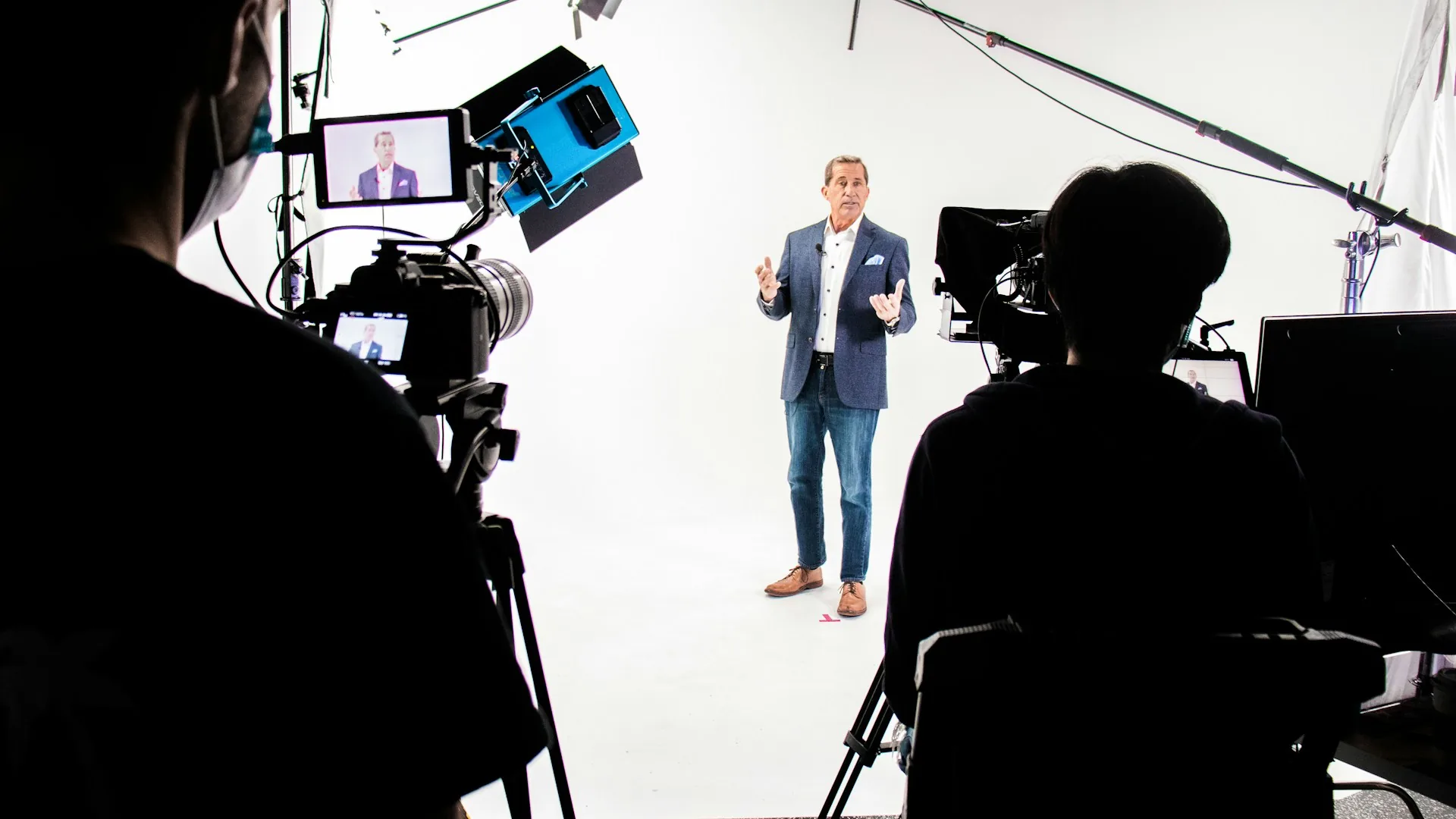
Yes, and we use it quite a lot in the studio. The key is that the script on the teleprompter is already written in short, natural sentences, not as a text meant to be read silently.
Who should write the script, me or the person on camera?
Ideally whoever will say it, or someone who knows their way of speaking well. A script written by a third party without that knowledge tends to sound foreign even when the content is good.
A good script goes unnoticed. What gets noticed is when it is missing or badly written. If you want help preparing the script before your next recording session, write to me from /#contacto and we will work through it together before the day of the shoot.
If you want to record premium content in Madrid, let's talk
From a quick Reels session to a full production day with editing and delivery, we can scope it to fit.