Professional audio for video: which microphone to use for each format
A practical guide to choosing the right microphone for the type of video you record: podcasts, reels, interviews, courses or brand pieces.
The most common mistake in video production for brand content is not the camera. It is the audio. You can shoot with a Sony A7 IV, Aputure lighting and a well-built set, and the result will still look amateur if the microphone does not fit the format. The reason is straightforward: the human ear tolerates poor sound quality worse than visual imperfection. Viewers put up with a slightly underexposed shot or an imperfect frame. But they tune out fast if the audio has background noise, echo or clipping.
At A0Studios we see this constantly in first consultations. Founders and marketing teams arrive with well-sorted camera setups but no clear audio strategy. The problem is not that they lack microphones. Often they have several. The problem is that they do not know which one to use for each format. What works on a long-table podcast does not work on a vertical reel shot standing up. What fits an interview on the move makes no sense for a seated talk to camera. Choosing the right microphone is not a technical detail. It is a production decision that directly affects the perceived quality of the content.
Why audio matters more than it seems in video
There is a well-documented principle in audiovisual production: the perceived quality of a video depends more on audio than on image. If the sound is bad, the video looks bad even with an expensive camera. If the audio is clean and solid, the video looks professional even with a modest camera. It is not an opinion. It is how the brain processes audiovisual information.
In practice, three recurring problems ruin video audio: background noise that gives away the space where it was recorded, distortion from an input level that is too high, and reverb or echo that breaks the sense of control and professionalism. All three have technical fixes, but the first line of defense is always choosing the right microphone for the format and the recording space.
Types of microphone and when to use each
Dynamic: podcasts and long interviews
The dynamic microphone (Shure SM7B, Rode PodMic) is the standard for podcasts and long indoor interviews. It rejects ambient noise well, does not need perfect acoustic treatment and handles voice level variations between different people. At A0Studios we use it for sessions with 2 or more people at a table, formats longer than 20 minutes and spaces that are not completely silent. Its weak point: it needs a good preamp. Without a decent preamp, a dynamic mic does not deliver its best and relative background noise goes up.
Condenser: voice-overs and presentations to camera
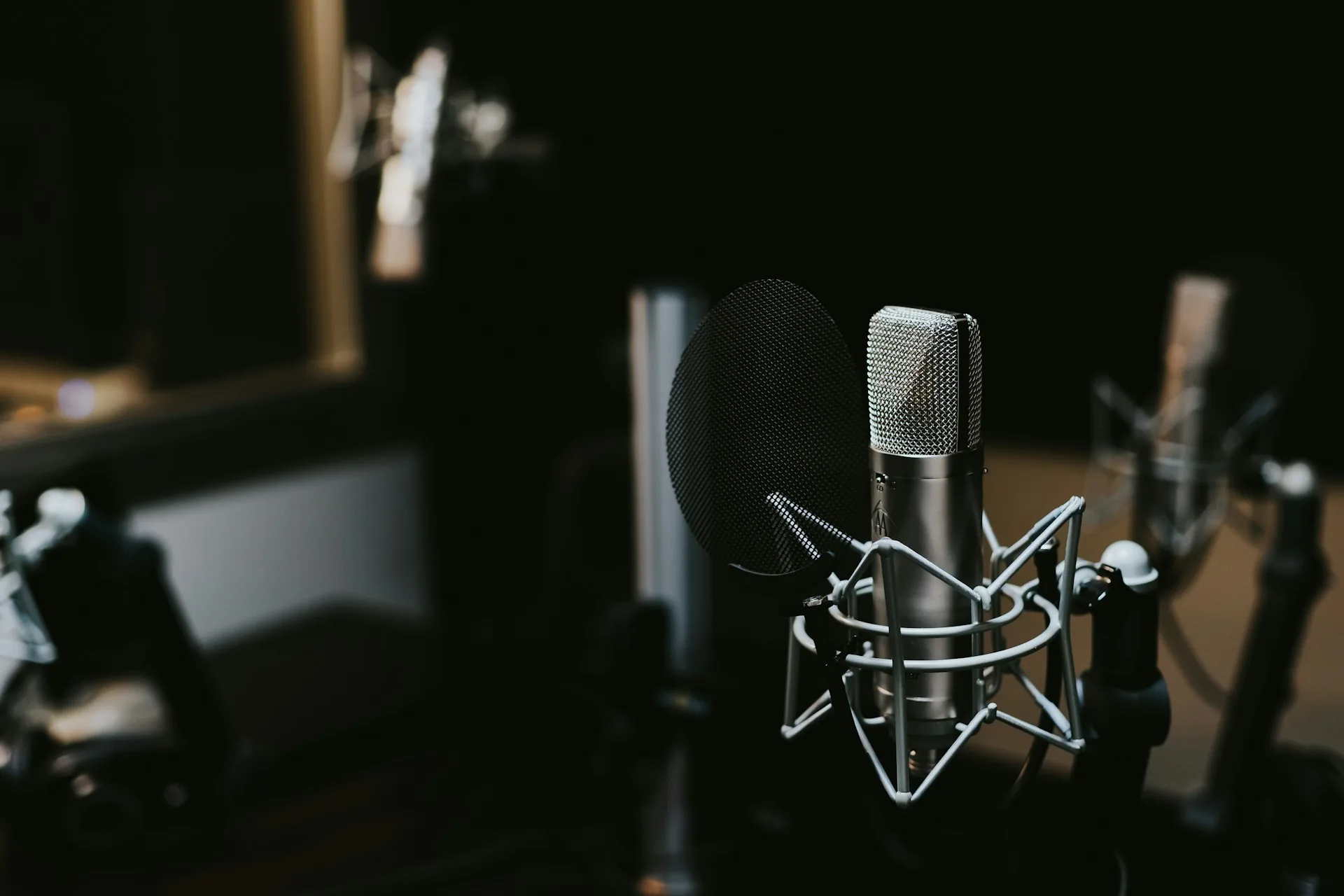
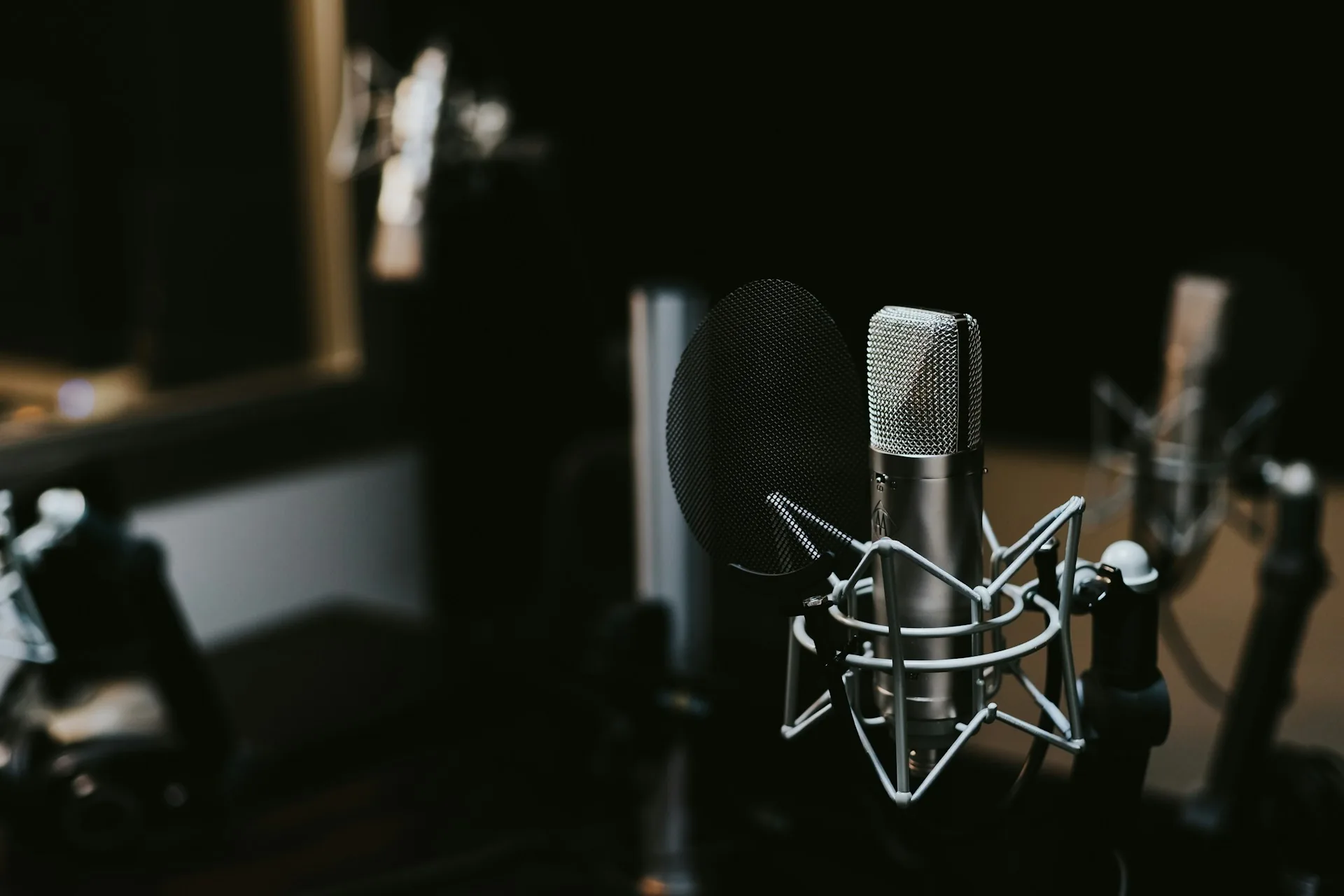
The condenser microphone (Rode NT1, AKG C214) captures more detail and range than a dynamic. It is ideal for voice-overs, online courses recorded to a fixed camera or pieces where you want presence and body in the voice without aggressive coloration. The catch is that it needs acoustic treatment: in a space with hard walls and no absorption, the condenser amplifies the problem instead of the voice. At A0Studios the penthouse has enough absorption for a condenser to sound good without extra preparation of the space.
Wireless lavalier: movement and multi-speaker interviews
The wireless lavalier (Rode Wireless GO II, DJI Mic) is the solution when the presenter moves, several people speak from different points in the space, or you record outside the studio. It loses some tonal quality compared with a tabletop dynamic (the capsule size is the limit) but gains total flexibility. For reels with movement, outdoor interviews or pieces where the camera changes position, the lavalier is the right answer. With two units you can record interviewer and interviewee at the same time on separate tracks.
Shotgun: reels, brand video and agile content
The shotgun microphone (Rode VideoMic NTG, Sennheiser MKE 600) is directional: it picks up what is in front of it and rejects the sides and the background. Mounted on the camera or on a boom, it is the production microphone of choice for brand reels, interviews with no visible cables and content where agility matters more than maximum detail. With a Sony A7 and well-adjusted framing in a controlled space, the result is more than enough for professional social content.
Common mistakes when choosing a microphone for video
- Using the camera's built-in microphone: it picks up reverb, ventilation and set noise as much as the voice.
- Using a condenser in a space with no absorption: it amplifies echo and ambience instead of isolating the voice.
- Not monitoring the input level: recording too hot or too low creates problems post-production cannot fully fix.
- Ignoring the microphone's polar pattern for the format: a cardioid pointed the wrong way costs you bass and presence.
- Mixing microphone types without balancing levels: if you record with a lavalier and a dynamic at the same time, the final mix will be uneven unless you set the gain separately.
Frequently asked questions
Can I record a podcast with a lavalier microphone?
Yes, with caveats. The lavalier gives you flexibility, but the dynamic gives you better presence and room rejection for long formats. If you record seated at a table in controlled conditions, the dynamic always beats the lavalier in perceived voice quality.
Which microphone should I use to record vertical reels in a studio?
At A0Studios we usually use a shotgun on a boom to keep the frame clean with no visible cables. If the presenter talks straight to camera without moving, a well-positioned shotgun gives a clean result and does not need heavy audio post-production.
Is iPhone audio good enough for professional content?
For very short social clips it can work, especially with a quality lavalier connected. For podcasts, courses or brand pieces, no: background noise and codec compression greatly limit the professional feel the format calls for.
How much better is audio recorded in a studio than at home?
A lot, and not only because of the equipment but because of the space. A penthouse with proper absorption removes the echo that ruins home audio. At A0Studios, with a well-gained dynamic or condenser, the audio comes out ready for mixing without heavy post-production treatment.
If you have a video project and are not sure which audio setup fits your format, tell us what you need from /#contacto. We will tell you which microphone we would use, how we would record it and what to expect from the final result.
If you want to record premium content in Madrid, let's talk
From a quick Reels session to a full production day with editing and delivery, we can scope it to fit.